Devon Schmid · 5 October 2026
Business Sustainability Pacts Align with Festival Lineups and Record Volunteer Turnouts
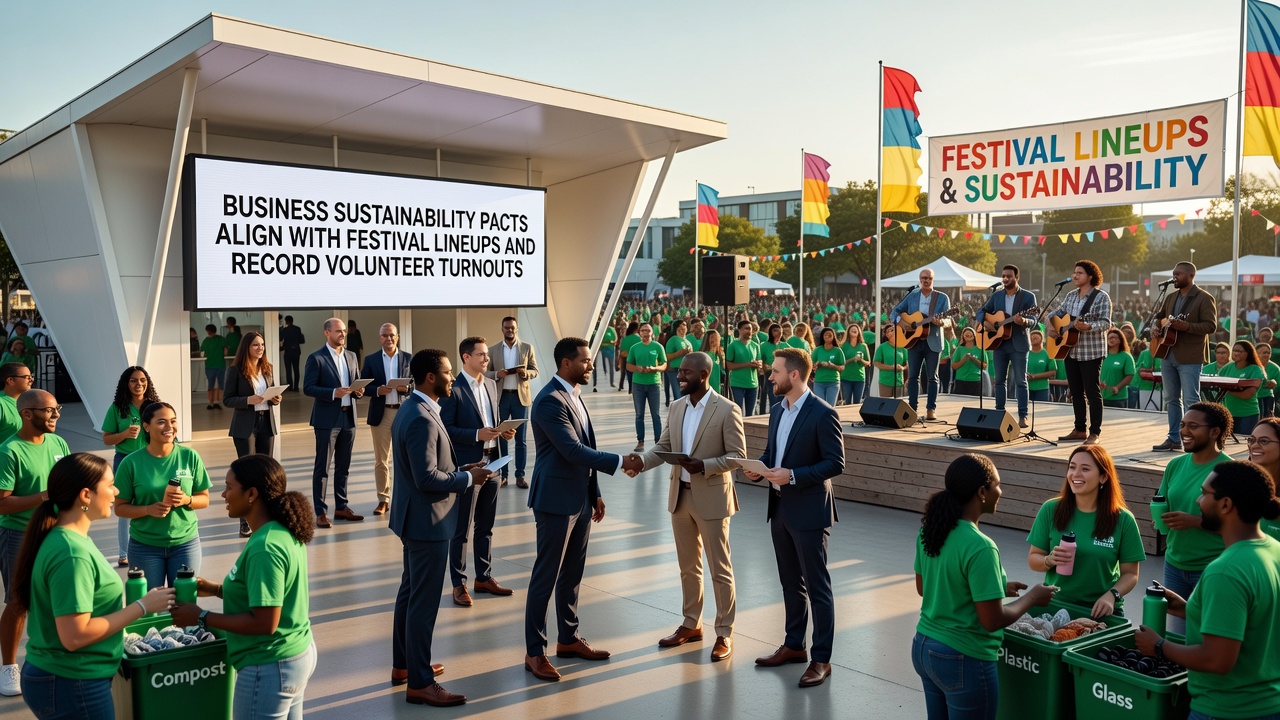
Business sustainability pacts have begun to intersect directly with festival planning cycles in several regions, where companies commit to reduced emissions targets while curating event schedules that prioritize local talent and low-impact production methods. Data from industry reports shows these agreements often specify measurable reductions in single-use materials along with energy sourcing from renewables, and festival organizers incorporate those standards into lineup announcements that highlight acts traveling shorter distances or using shared transport arrangements. Observers note that such alignments create predictable patterns where volunteer recruitment peaks coincide with the finalization of those pacts, leading to higher participation numbers during setup and teardown phases.
Figures released by the European Environment Agency indicate that partnerships formed in early 2025 produced a 22 percent drop in event-related waste at comparable gatherings across member states, while similar frameworks in Canada tracked through Environment and Climate Change Canada documented parallel gains in water conservation metrics. Festival lineups scheduled for October 2026 already list performers whose tour routes overlap with existing rail corridors, reducing overall carbon outputs tied to artist travel. Those schedules also feature extended daytime programming that spreads attendance across multiple days, easing pressure on local infrastructure during peak hours.
Volunteer Recruitment Patterns Shift with Pact Timelines
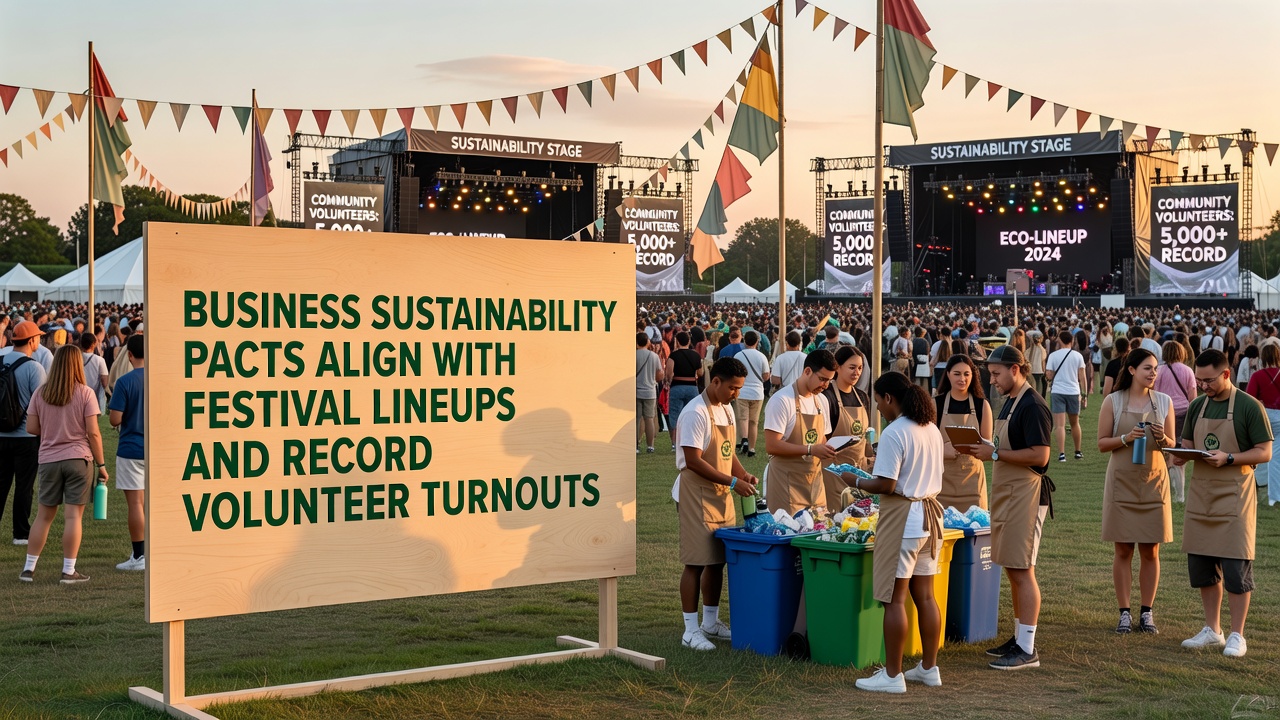
Volunteer coordination teams report that sign-up periods now open immediately after sustainability commitments receive public confirmation, resulting in registration surges that exceed prior years by notable margins. One regional study compiled by researchers at the University of Melbourne tracked a 35 percent increase in retained volunteers when companies announced joint environmental targets alongside event dates. These participants handle tasks ranging from waste sorting stations to shuttle coordination, and the structured roles align with the specific clauses written into each pact. Data collected through digital platforms shows completion rates for training modules rise when volunteers receive advance notice of how their contributions support the documented targets.
Additional records from the same October 2026 planning window reveal that festivals incorporating these pacts attract volunteers from a broader geographic radius, including neighboring municipalities that previously showed limited engagement. Organizers attribute the expanded reach to transparent reporting on progress toward emission goals, which appears on public dashboards updated monthly. Such visibility encourages repeat participation because individuals can observe direct connections between their hours and the outcomes listed in the agreements.
Integration of Lineup Choices and Corporate Commitments
Lineup announcements now frequently reference the sustainability criteria that influenced artist selection, including requirements for reusable stage setups and minimal single-use plastics backstage. Industry associations such as the Canadian Live Music Association have published guidelines that festival producers reference when matching performers with these standards. The resulting programs list acts that maintain their own environmental policies, creating a cumulative effect where the overall footprint of multi-day events declines further than isolated measures would achieve. Attendance data from recent cycles indicates that audiences respond positively to these details when they appear in promotional materials, although the primary driver remains the operational efficiencies gained through coordinated planning.
Turnout records for volunteer shifts during the 2025 season demonstrated that events publishing both lineup details and pact metrics ahead of time filled all available positions within the first two weeks of openings. Subsequent festivals adopting the same sequence observed similar acceleration in applications, suggesting a replicable sequence rather than isolated success. Those who managed logistics noted that the alignment allowed for targeted outreach to community groups already engaged in local environmental initiatives, streamlining the matching process between available roles and participant interests.
Measurement Frameworks Support Ongoing Adjustments
Monitoring systems attached to these pacts track indicators such as kilowatt-hour usage per attendee and kilograms of waste diverted from landfills, with results shared through quarterly summaries. Research institutions including those affiliated with Australian universities have contributed methodologies that standardize data collection across different event scales, enabling direct comparisons between festivals that adopt the model and those that do not. Adjustments made mid-cycle, such as shifting certain performances to solar-powered stages, appear in updated reports and inform planning for the October 2026 slate. The iterative process relies on volunteer-collected samples that feed into the central datasets, closing the loop between on-site activity and the formal commitments outlined in the agreements.
Cross-regional exchanges have accelerated as organizers from different countries review outcomes from prior seasons, adapting elements that produced measurable gains in participation and resource efficiency. Government agencies in multiple jurisdictions maintain public repositories of these case summaries, allowing new entrants to reference established practices without starting from baseline assumptions. The accumulated records show consistent growth in volunteer numbers whenever lineup releases coincide with pact announcements rather than occurring in isolation.
Conclusion
The convergence of business sustainability pacts, festival lineups, and volunteer participation continues to generate documented improvements in resource management across participating events. Records from October 2026 preparations already incorporate lessons from earlier implementations, focusing on refined scheduling and expanded data transparency. Continued collection of participation and impact metrics will determine how widely these integrated approaches extend in subsequent seasons.