Jakob Vogel · 7 September 2026
Cultural Gatherings Reshape Regional Economic Flows Through Spending and Infrastructure Shifts
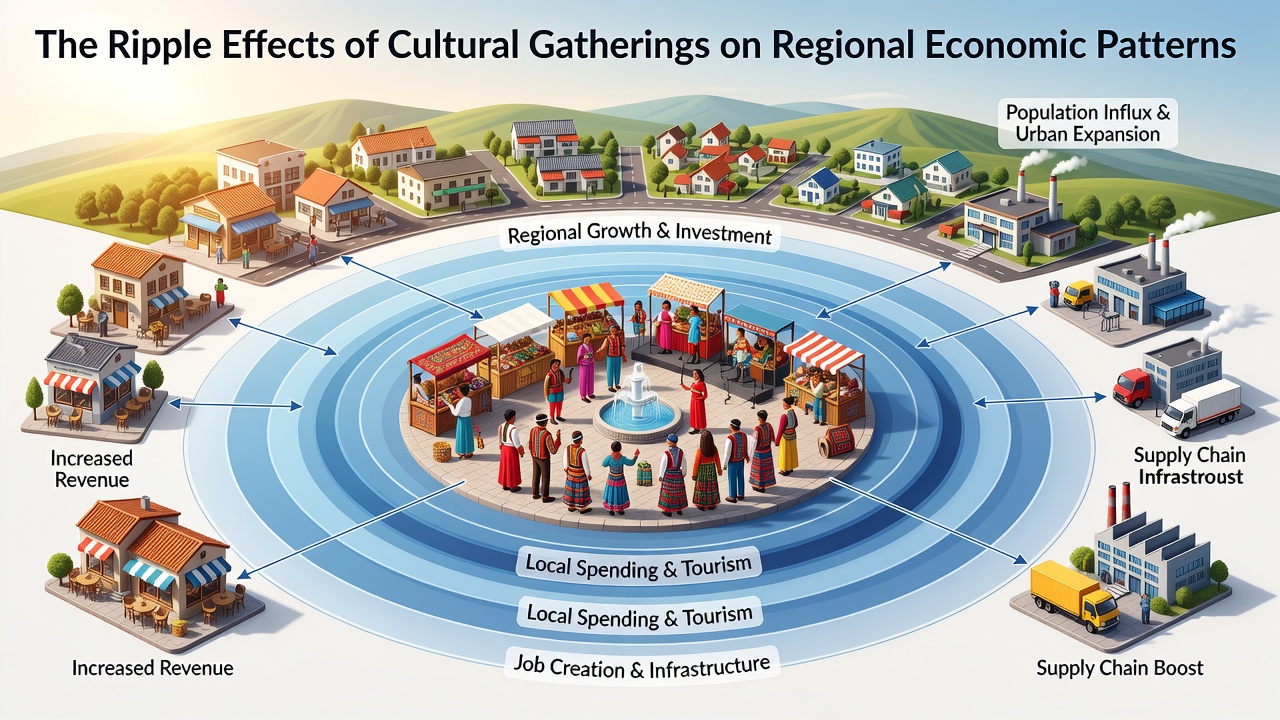
Regional economies experience measurable changes when cultural gatherings such as festivals, exhibitions, and community events draw visitors from outside the immediate area, and these shifts appear in tourism revenue, employment rates, and supply chain demands. Data from multiple studies shows that visitor spending during such events circulates through lodging, food services, and retail sectors, while local businesses adjust inventory and staffing levels to match the temporary surge in demand.
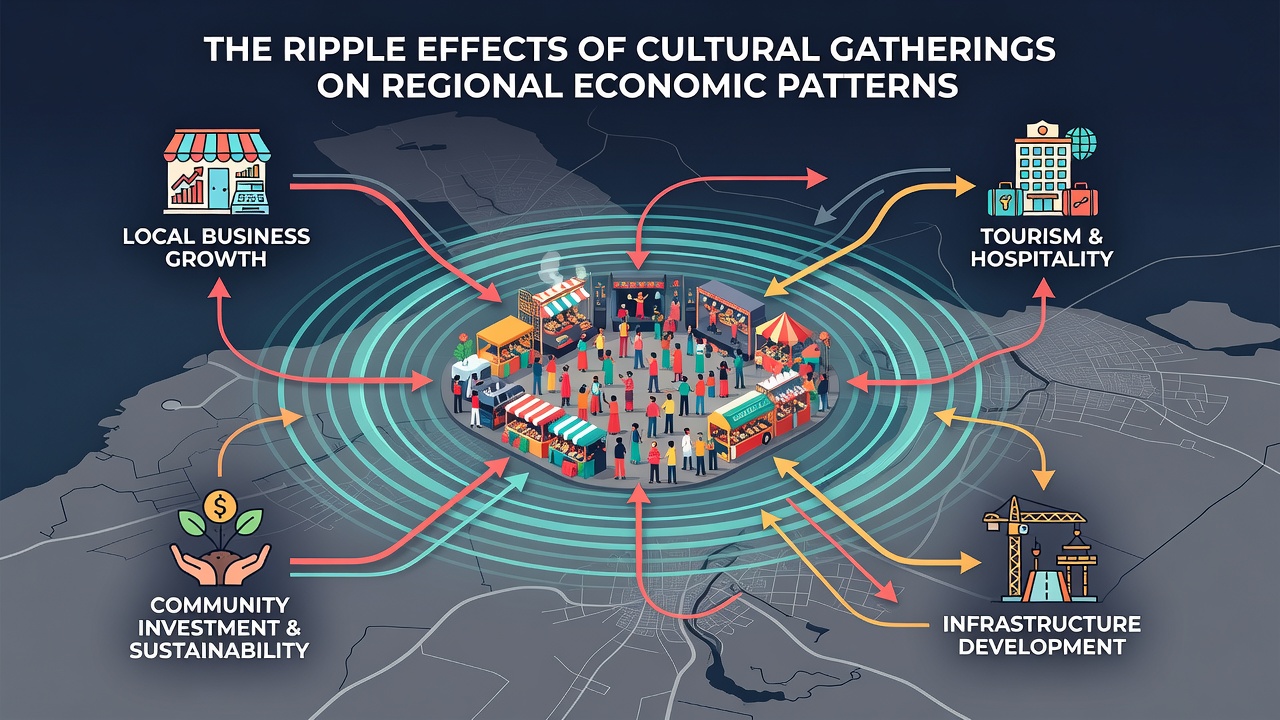
Observers note that infrastructure investments often follow recurring gatherings because planners allocate funds for road improvements, public transit expansions, and utility upgrades based on attendance projections. Research indicates these preparations create construction jobs in the months leading up to major events, and the completed projects continue to support year-round mobility for residents and commuters alike.
Direct Spending Patterns and Multiplier Effects
Attendees at cultural gatherings purchase tickets, meals, souvenirs, and transportation services, yet the total economic activity extends beyond these initial transactions because vendors source supplies from regional producers and pay wages that workers then spend at other local establishments. Figures from Statistics Canada reveal that cultural events in mid-sized provinces generated over 1.2 billion CAD in direct visitor expenditures during 2024, with secondary effects lifting employment in adjacent sectors by an average of 4 percent in host communities.
Seasonal patterns emerge when organizers schedule events during shoulder months, and September 2026 calendars already list multiple regional harvest festivals and music series that aim to extend tourist seasons beyond summer peaks. Tourism Australia reports indicate such timing spreads economic benefits more evenly across the year while reducing pressure on peak-period facilities.
Employment and Skills Development
Event staffing requirements lead to short-term hiring in hospitality, security, and logistics roles, while longer-term opportunities arise in event management and venue operations. Workers gain experience that transfers to other industries, and training programs funded by event revenues help build a more versatile regional workforce. One study conducted by the European Commission documented a 7 percent rise in hospitality certifications in areas that hosted annual cultural series over five consecutive years.
Businesses adapt by forming temporary partnerships with artisans and performers, which creates networks that persist after the event concludes. These connections facilitate future collaborations and reduce reliance on external suppliers for subsequent gatherings.
Infrastructure and Long-Term Regional Planning
Transportation authorities monitor attendance data to refine service schedules, and repeated gatherings often justify permanent route additions or frequency increases. Planners incorporate these patterns into five-year development plans, which in turn attract further private investment in commercial properties near event venues. Australian Bureau of Statistics figures show that regions with consistent cultural programming recorded 11 percent higher commercial construction permits compared with similar areas lacking such events.
Public spaces receive upgrades including improved lighting, seating, and accessibility features when events highlight deficiencies, and these improvements remain available for everyday community use. The resulting environment supports both tourism and resident quality of life without requiring separate capital campaigns.
Supply Chain and Vendor Ecosystem Adjustments
Local farmers and manufacturers increase production ahead of known event dates, and distributors adjust delivery routes to accommodate higher volumes of perishable goods and equipment. These adjustments stabilize cash flow for smaller suppliers who otherwise face seasonal fluctuations. Researchers at the University of British Columbia tracked three festival circuits and found that participating farms expanded their customer bases by 18 percent on average through direct sales at event grounds.
Digital platforms now facilitate vendor registration and inventory coordination, which lowers administrative overhead and allows organizers to scale participation without proportional increases in staffing. The resulting efficiency keeps costs lower for attendees and sustains vendor margins across multiple events.
Conclusion
Regional economic patterns shift measurably when cultural gatherings occur on a recurring basis, as spending flows, employment opportunities, and infrastructure decisions align around predictable visitor volumes. Data from government statistical agencies and academic research centers continues to document these connections across different geographic contexts, providing planners with evidence for future scheduling and investment decisions. September 2026 programming offers another cycle through which observers can track how these ripple effects unfold in practice.